
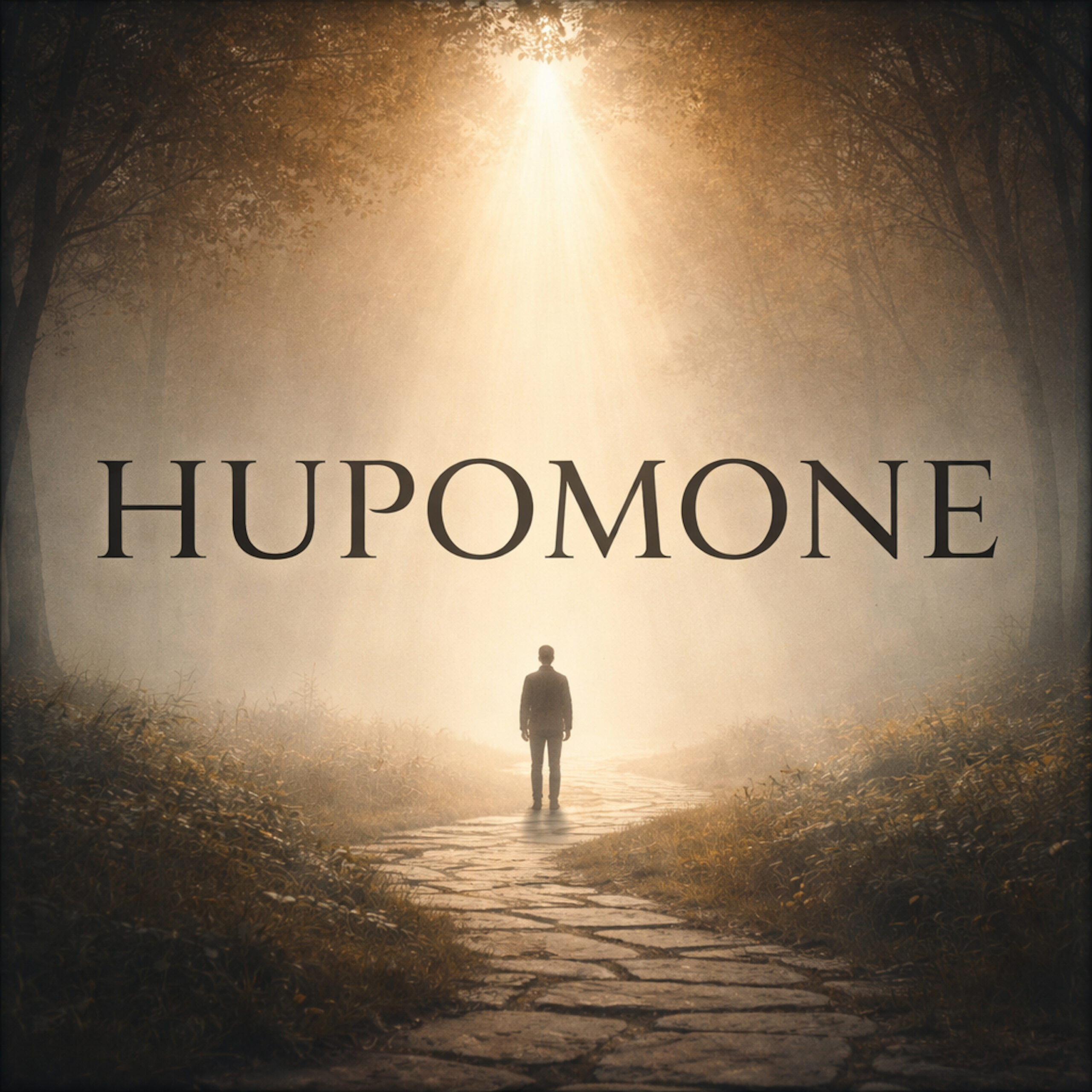
Hupomone (ὑπομονή) is a powerful Greek word meaning steadfast endurance, patient perseverance, or courageous constancy, derived from hupo (under) and mone (to stand), literally “to stand under” pressure, trials, or suffering without giving up, clinging to hope and faith until the end, often used in the New Testament for the believer’s enduring spirit in hardship, like a marathon runner finishing the race.
What Hupomone Is (and Why It Exists)
Hupomone is not a brand, a productivity system, or a self-improvement project. Though it will occasionally look like those things from the outside. It’s an attempt to name and respond to something quieter and more unsettling: the slow erosion of wholeness that happens when life is technically functional but spiritually misaligned.
Most people don’t fall apart all at once. They drift.
They accumulate coping strategies that work. Until they don’t.
They gather information without formation, conviction without embodiment, belief without healing.
Hupomone exists because that drift is real, and because it doesn’t resolve itself through insight alone.
At its center is a single question:
How do I live in a way that is whole, honest, and awake—aligned with God instead of slowly drifting from Him?
That question implies two things at once. First, that something has gone wrong. Second, that healing is possible. But not abstract, not instant, and not disembodied.
The Problem It’s Trying to Name
Much of modern life is organized around efficiency, stimulation, and self-definition. What it’s not organized around is formation. Becoming someone capable of telling the truth, carrying responsibility, and loving well.
We’ve learned how to optimize outputs while neglecting inputs.
We’ve learned how to curate identity without confronting character.
We’ve learned how to manage symptoms while avoiding roots.
Hupomone uses the language of death and life deliberately—not as metaphorical flourish, but as diagnosis. Certain ways of living deform us. Others restore us. Scripture names this plainly. Psychology confirms it clinically. Experience teaches it painfully.
The danger isn’t obvious rebellion; it’s slow accommodation.
What the Project Is Actually Doing
Hupomone is structured as a Formation Network: a map of tools, practices, stories, and spiritual frameworks that address the human person as a whole.
Not everything here is original. That’s intentional. Formation doesn’t come from novelty; it comes from integration.
The work unfolds across a simple progression:
- Understanding yourself honestly
- Naming the patterns shaping your choices
- Organizing your inner world coherently
- Healing what knowledge alone can’t fix
- Building a stable identity rooted in virtue and responsibility
- Acting on what matters in embodied ways
- Becoming someone capable of love
This progression isn’t theoretical. It shows up across eight domains of life—work, health, environment, relationships, education, spiritual life, hobbies, and goals—because wholeness either incarnates there or it doesn’t exist at all.
If something claims to be “spiritual” but never touches how you work, relate, steward your body, or order your days, it’s incomplete.
What This Is Not
Hupomone is not interested in:
- “Outsmarting” Christianity
- Reducing faith to psychology
- Offering quick fixes or aesthetic spirituality
- Pretending wounds disappear through willpower
- Shaming people into transformation
Healing is slower than that. More relational. More costly.
This project assumes resistance, confusion, and fatigue. Not as failures, but as part of the terrain.
How to Read What Comes Next
Some posts will feel philosophical. Others personal. Some will be uncomfortable. Some will seem simple on the surface and heavy underneath. That’s by design.
Nothing here is meant to be consumed quickly.
Nothing here works without practice.
Nothing here replaces community, confession, or lived obedience.
Hupomone is best read the way formation itself happens: gradually, honestly, and with a willingness to be changed rather than merely informed.
If that feels frustrating, you’re probably reading it correctly.
Discover more from Will Eason
Subscribe to get the latest posts sent to your email.
